

Monitoring - Control - Automation - Safety

Guided by Dr. Boris Boguslavsky, Arthur Zatarain wrote his first computer program in 1971 using punch cards on a Fortran system at LSU. He hand-built his first micro in the mid-70'a and wrote its "Zatmon" realtime operating system on a thermal printer. Since then he has designed and programmed computer projects ranging from single-chip micros to mainframe computers. But with his career centered on control systems engineering, most of his attention was given to embedded microcomputers, industrial computers, Programmable Logic Controllers (PLC), and Distributed Control Systems (DCS).
Arthur's computer career has involved software languages ranging from machine language and assembly code to PLC ladder logic, object oriented programming, and event driven programming. The graphic icons on today's computer desktop occupy more memory than the entire storage available in the early micros. But despite the incredible advances in computer technology, the fundamentals remain unchanged; properly designed and programmed systems are essential for reliable and safe industrial computer applications. Arthur's long relationship with computers of all stripes is a valuable resource in many forensic matters, such as these Industrial Computer & Control engagements.
 |
 |
 |
Representative highlights and milestones are as follows:
1976 - Microprocessors: While in graduate school studying fluids, Arthur was "tricked" (by Dr. Andrew Longacre) into taking a class on a new gizmo called a "microprocessor." It featured a hand-wired Motorola 6800 microcomputer with a whopping 256 bytes (that's individual bytes-- not megs) of memory. This class was a life changing experience, leading to a computer controlled windmill on the UNO engineering building. Finding micros more fun than windmills, Arthur soon migrated from studying mechanics and fluids to industrial computing and never looked back.
1976 - Offshore Production Simulation Program: This Fortran program was written while at Shell Oil to simulate oil and gas processing in an offshore environment. It was later migrated to Basic on an IBM mainframe, and eventually operated on IBM PC systems.
1977 - Early PLC Installation: Arthur programmed and installed "LDC-40" manually wired programmable logic controllers to replace standard flow meter control systems for Shell Pipeline. These were among the very first PLC systems installed offshore in the Gulf of Mexico.
1977-79 - Digital Group and S-100 Micros: The first "real" microcomputers in Arthur's career were home-made systems named "Datarain" computers. They were based on Digital Group and S-100 Bus systems using the Z-80 processor. In addition to designing and fabricating circuit boards, Arthur adapted Digital Group's Phimon operating system into a paged-memory, multi-tasking variant that he named Zatmon. The system operated automated Phideck drives to load the OS, overlays, and program code at a speedy 110 baud. That original DG system evolved into a S-100 system running CP/M, the details of which can be viewed here: AMZ Micros
1979 - PLC flow control: While at Shell Oil, Arthur programmed early Allen Bradley Programmable Logic Controllers (PLC) to perform oil and gas production control and safety functions. These systems were among the first Ladder Logic programmable systems installed in the Gulf of Mexico.
1980 - Mag Tape and Punch Card Interfaces: At Dataran Engineering, Arthur developed a diverse range of Z-80 based interfaces for older computer peripheral equipment. The initial target was connection to an Alpha Micro WD16 (LSI-11) DEC-compatible processor, with later variants running on PC compatible computers. Some of these systems remained in operation as late as 2008.
 |
 |
1982 - Microcomputer RTU: This solar powered Remote Terminal Unit built for McMoran Offshore was programmed in Zilog Z-80 assembly language. The RTU performed supervisory control and data acquisition (SCADA) over both telephone and radio links.
1983 - AutoCAD Database interface: Arthur became one of the earliest AutoCAD developers to produce realtime database interfaces for PC compatible machines. A modified version of the system was later incorporated into a microcomputer used for gyro compass guidance of dynamically positioned dredging barge.
1984 - Production Allocation Program: Arthur's "PAP" System was a PC-based oilfield reporting system for multi-well comingled production environments. Despite the relatively simple user interface and batch process methods, PAP remained in service with several oil and gas producers into the 21st century.
1985 - Drill Mud Logger: Arthur developed a microcomputer-based oil rig mud monitoring system to track parameters related to drill rates and mud analysis. The system was programmed in PL/M on a multi-processor Z-80 system using the CP/M and TurboDos operating systems.
1986 - PC-AT Manufacturing: IBM AT compatible "clone" computers produced by Arthur under the Naratad brand name served both commercial and industrial users. Various configurations were developed for general purpose computing as well as high performance industrial computing in hot, wet, and high vibration applications.
1987 - Nuclear Medical Device: The Omnitron Remote Afterloader was programmed with the robust realtime PC technology developed at Dataran Engineering. This electromechanical system used both Pascal and Assembly code to configure and operate the patented cancer treatment system on which Arthur is a named inventor.
 |
 |
1987 - Voice Auto-dialer: Arthur designed and programmed this single board computer for Seekirk using core routines from the Zatmon OS. The device used an Hitachi Z-80 derivative to receive touchtone DTMF codes for programming and control. The design evolved into the LB-100 / Type 100 system manufactured by TEST Automation and Controls as part of the SCADAware product line.
1988 - Oilfield Telemetry: Arthur's experience with realtime Personal Computer programming and I/O hardware design led to development of the SCADAware line of oilfield and industrial telemetry systems. These PC based systems were written in Intel assembly code and Pascal to perform complex telemetry, flow measurement, and process control functions using industrial personal computers, often in low power solar panel applications.
1991 - Certification in Systems Integration: This credential was administered by the Institute of Industrial Engineers (IIE). Certification required demonstrated competence, experience, and testing in the integration of process systems, industrial communications, and computerized control devices such as PLC and DCS equipment.
 |
 |
1992 - PLC Flow Measurement: Arthur programmed PC slot computers embedded into standard industrial PLC racks to perform AGA3 gas flow measurement and control while interfacing to external programmable devices. Process interfaces included pneumatic and hydraulic sensing and adjustment of mechanized process control components.
1994 - Modbus PLC Voice Interface: A modified SCADAware RTU formed the "Talk Box" system capable of direct interface to Modbus compatible PLCs. The system provided intelligent voice annunciation based on logic status communicated via a Modbus open architecture interface to any PLC.
1996 - PLC Network Communications: An embedded PLC computer linked to SCADAware telemetry systems to allow exchange of flow computation and control parameters over standard radio telemetry links.
1997- Automated Pharmaceutical Dispenser: Infringement analysis on the "Baker cell" patent led to product development of a portable pharmaceutical dispensing cart. The unit integrated bar code scanning, database management, and automated electromechanical sensing and positioning.
1998 - Redundant PLC System: Arthur served as the control system architect for the world's largest pipeline production ship. The continuous pipe-lay process used redundant PLCs to control automated welding machines and conveyors. The process was linked with the ship's dynamic positioning system (DPS) to coordinate pipeline production with ship movement over the seafloor.
 |
 |
2000 - Patent Testimony: Arthur testified in US Federal Court in a matter involving PC-based monitoring of mainframe computer operations. His expertise related to PC memory management, network communications, and realtime program operation under the DOS operating system.
2004 - Solaia PLC Patent: Arthur consulted for several manufacturers regarding infringement and validity of the "Solaia patent". The highly publicized patent disputes centered on PLC to Personal Computer communication links and data displays.
2004 - Computer Forensics: Arthur was certified at Oregon State University for New Technology Inc. computer forensics. This experience is useful for expert engagements in today's computer-centric industrial control environment.
2006 - Net DDE: The SCADAware program was enhanced to include Net DDE processing to enable integration of existing SCADAware systems with larger SCADA systems supporting open architecture network protocols.
2011 - Forensic Engineering Certification: Arthur was admitted to the National Academy of Forensic Engineers (NAFE), and became Board Certified in Forensic Engineering by the Council of Engineering and Scientific Specialty Board (CESB).
 |
 |
 |
2011 - BP Oil Spill: Arthur was selected as an expert witness for the subsea monitoring and control computers in the BP Macondo subsea blowout preventer. He testified on the related computer hardware and software in April 2013.
2012 - Certification in Safety Instrumented Systems (SIS): Arthur was certified by the International Society of Automation (ISA) for this technical field involving the design and operation of high-reliability control systems. The sophisticated systems involve redundant and fail-safe designs to achieve specified levels of reliability for critical control and safety applications.
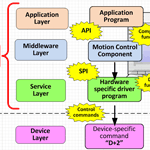
2013 - Motion Control Systems: Honeywell and ABB separately retained Arthur for patent disputes in the field of motion control software. This involved OLE for Process Control (OPC) as it related to multi-layered software dating to the 1970's. He was also involved in a patent matter for computer control for wireless utility metering and load control. Rockwell relied on Arthur to analyze PLC software for an industrial accident.
 |
 |
 |
2014 - Linear Motors & HVAC Systems: A major automation player relied on Arthur in a patent matter involving hardware and software for linear motors used in motion systems. He was also involved with several patents for computer control of large-scale HVAC & refrigeration systems.
2016 - Drilling Rig Control System: Arthur testified as an expert witness in a patent dispute involving automated control of directional drilling rigs.
2018 - Nuclear Power Plant DCS: Arthur testified as an expert witness in an international arbitration related to the design, maintenance, and function of control and monitoring systems installed at a nuclear power plant in the late 1990s.
2019 - Automated Vehicle Lift Equipment: Arthur testified as an expert witness in a patent dispute involving control of vehicle lifting equipment. The issues involved details of wired vs. wireless control during the lifting operation.
2020 - Automated Cremation Control: Arthur testified as an expert witness in a trade secret dispute involving control of a cremation furnace, termed a retort. The issues involved details of the software and hardware controls used in the PLC control system.
2021 - Industrial Accident - DCS Motor Control: Arthur testified as an expert witness for an incident at a renewable fuels manufacturing plant. The issues related to the design and operation of lockout-tagout (LOTO) procedures for DCS control during maintenance operations involving a large group of workers.
2022 - Chemical Plant DCS: Arthur testified as an expert witness in an international arbitration dispute related to replacement of older DCS equipment with current technology systems.
2022 - Buiding Automatin Patents: Arthur invesigated alleged patent infringement in a group of patents related to building automation devices, networking, and scheduling.
2023 - Remote Control Crane Accident Arthur testified about operation of a remotely controlled overhead crane involving reliability of automated safety functions during normal and emergency conditions.
2023 - Wastewater Network Devices: The performance of networked PLC devices using wire, fiber, and telephone links was analyzed in regard to a sewage spill event.
2024 - Fuel Dispenser Automation: The traditional and electronic controls for a retail fuel dispensing system was examined and analyzed in regard to a fatal fire incident.
2024 - Electrical Co-Generation Accident: Arthur assisted an international client with preliminary analysis of a utility-grade electrical generator accident involving failure of a DCS to detect alarm conditions and properly shut down the steam supply to the turbine.
2024 - Tire Manufacturing Accident: Arthur began investigation of an industrial accident involving PLC control of a chemical mixer on a tire manufacturing line.
Present day - Forensic & Strategic Engineering: Arthur continues to consult in a variety of situations involving industrial computers, PLC, and DCS equipment. His role includes software and hardware analysis as well matters related to design, fabrication, installation, and maintenance. A sample of his consulting projects are listed here.
Copyright © 2025 Arthur Zatarain, all rights reserved. Some images are modified for confidentiality
or illustration clarity. This site should not be used as a technical or legal reference.